
From 1 July 2026, the NSW Government will introduce new staged food waste separation requirements for many businesses and organisations that sell or handle food.
Because these changes apply statewide, the NSW EPA manages the official guidance for these changes. On this page, Shellharbour City Council is sharing the key steps and local service information to support businesses in our area.
Keep reading to find out what your business needs to do to prepare.
Step 1: Get ready (check your waste capacity)
First, work out your weekly general waste bin capacity. This simply means how many general waste bins your business has collected each week, and what size they are.
To make this easier, the NSW EPA provides an online calculator that helps confirm if and when your business needs to start separating food waste.
Step 2: Check the staged start dates
Next, check the staged rollout dates below. Your start date depends on your weekly general waste bin capacity. For example, larger businesses and institutions need to act sooner, while smaller businesses have more time to prepare.
Stage 1 – starts 1 July 2026 (largest waste generators)
This stage applies to sites with:
- 6+ × 660L bins, or
- 16+ × 240L bins, or
- a total of 3,960L or more of weekly general waste bin capacity
Stage 2 – starts 1 July 2028
This stage applies to sites with:
- 3+ × 660L bins, or
- 8+ × 240L bins, or
- a total of 1,980L or more of weekly general waste bin capacity
Stage 3 – starts 1 July 2030
This stage applies to sites with:
- 1+ × 660L bins, or
- 3+ × 240L bins, or
- a total of 720L or more of weekly general waste bin capacity
Tip: these thresholds are based on bin capacity per week (the number and size of bins), not how full they are.
Step 3: Set up your food waste service
Once you know your start date, the next step is to talk to your waste service provider about adding a separate weekly food waste collection service.
In addition, Shellharbour City Council offers weekly commercial FOGO services for businesses. If your business already uses a Council waste service, or if you would like to start one, contact us here or call Remondis Harbour Cities on 1300 121 344.
For the most up-to-date information about business food waste separation requirements, visit NSW EPA Business Food Waste.
FAQs
Top-
At the moment, landfill space in Greater Sydney is expected to run out by around 2030, and food waste makes up a large share of the waste businesses send to landfill. Because of this, the NSW Government is introducing changes that aim to reduce the amount of organic material going to landfill and help extend the life of existing landfill sites.
By separating food waste, businesses can divert organics to recycling. As a result, valuable food scraps can be turned into compost and other useful products, supporting a more circular economy.
-
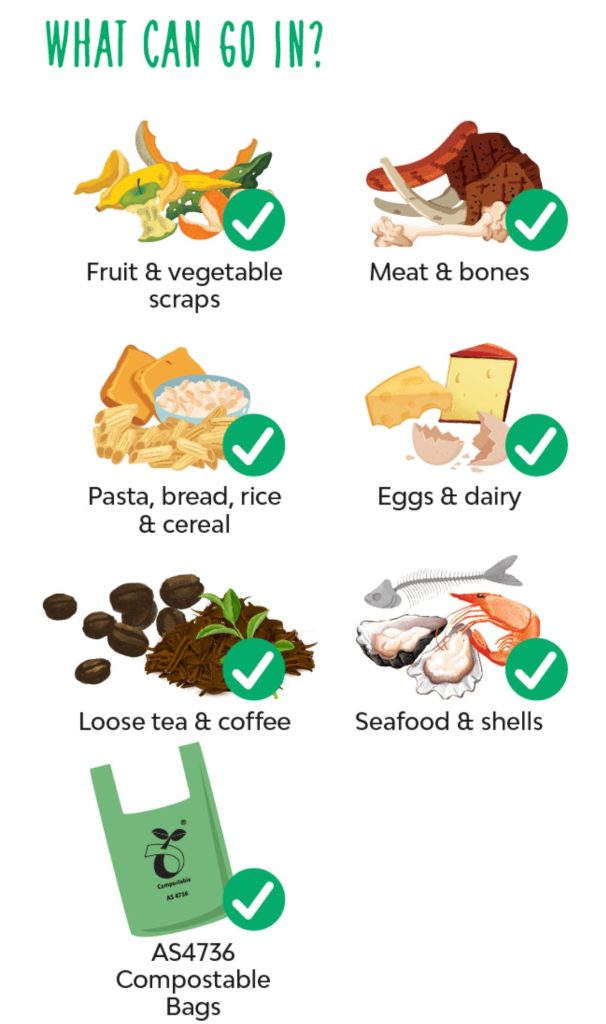
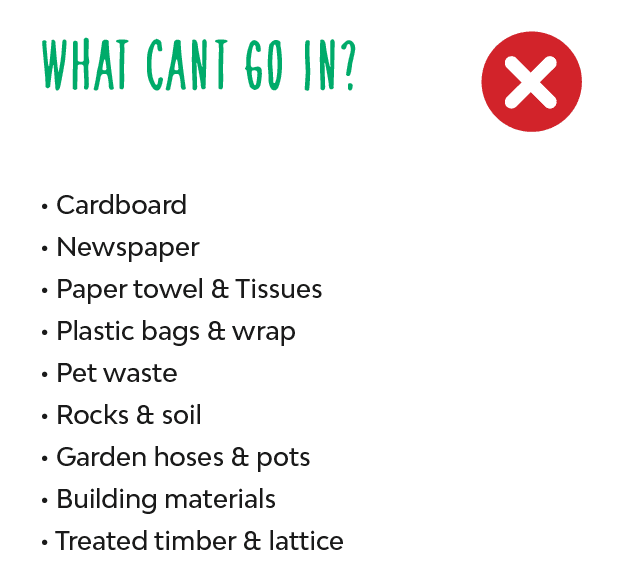
-
There is no legislated requirement for businesses to make sure customers dispose of waste correctly. However, clear signage can help customers use the right bins, reduce contamination, and keep the wrong items out of food waste recycling bins.
Additionally, food court operators do not need to meet the requirements in common seating areas until 2030. See exemptions from the FOGO mandates for more information.


